By January, I can usually see quite clearly what I grew too much of last year — and what I definitely underestimated.
From a household food-production point of view, winter still has about four months to go from this point. By mid-May, fresh produce for cooking will start arriving in real volume again, letting me cook straight from the garden. I look forward to that, because over the years I’ve found that avoiding preserving as much as possible is the secret to maximizing taste and nutrients at the table and minimizing effort in the kitchen.
But in the first quarter of the year, cooking from the garden is usually a bit of a struggle even with a polytunnel and row covers. Sorrel, spinach, salads, radishes, spring onions and chervil lose their novelty quickly, and day-to-day meals tend to come from the freezer or a jar. Or, reluctantly, from the shop — which I always regret three times: when I see how sorry-looking specimens the vegetables are, when I see their price, and when I finally taste them.
So the beginning of January is the perfect time to adjust my gardening plans. Right now, it’s quite obvious that there’s no way I’ll use up all the tomato sauce I still have before the next tomato season comes banging on my kitchen door. On the other hand, the onions I grew last year are already gone — and some foods, like a good Hungarian pörkölt are just not the same when made with the leeks or spring onions I currently have on hand in my garden. This is the point where I start fine-tuning the rhythm of my sowing plan to match the needs of the kitchen.
Seeds in a tray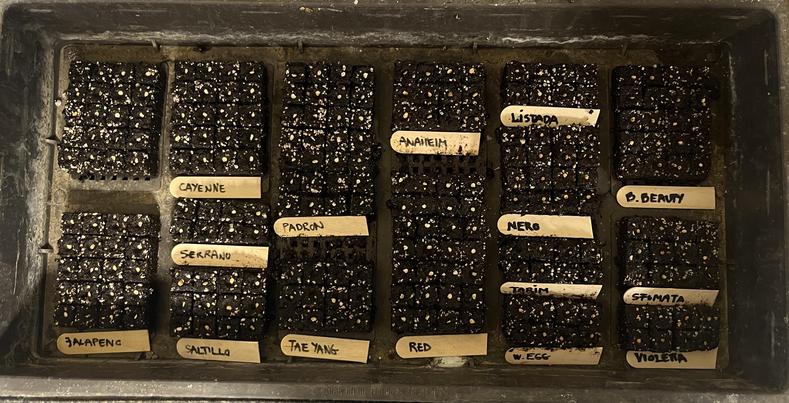
This year I’ll grow only 10 processing tomatoes instead of last year’s 20, which should also make it easier to keep the stink bugs under control. The cold spring slowed onion growth painfully, so I’ve sown more this year — and I’ll probably sow again, because onion seed germination is pretty unreliable. The cabbages stayed small last year because they went into the ground late. That’s not necessarily a problem for a three-person household when it comes to fresh eating — huge heads aren’t very practical anyway. I would have liked to do some fermenting though, and large heads are much better for that. So this year, I’ll plant the brassicas at the same time as the tomatoes, starting with Brussels sprouts, since they need the longest time in the garden. If worst comes to worst, and I have an early glut in the fall when we are still knee-deep in summer vegetables, I will simply make my sauerkraut sooner. Long-season cabbages also have more of a risk of getting split open by greedy, malicious slugs, and the longer the season, the longer the slugs have to invade my cabbage-fortresses. So I will need to pay extra care to make sure that the perlite I throw down around the heads stays dry enough to keep slug populations down.
Plant starts in a tray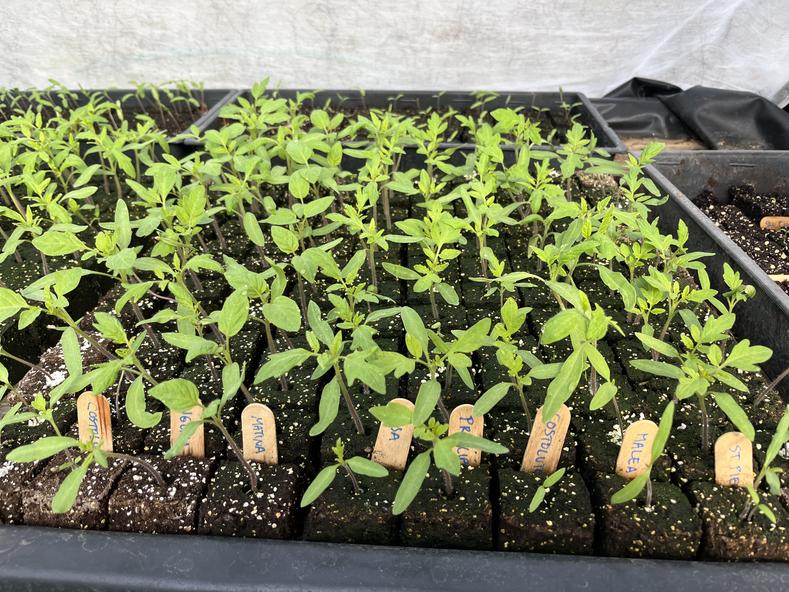
Beginner gardeners usually find the plant starting calendar confusing, so here is an example of a real kitchen garden’s seeding schedule. It is optimized for Budaörs, a rocky suburb of Budapest, with the garden on a north-facing slope.
Week 1 Link to heading
Onion, leek (planting out: when temps are not expected to fall below -5 °C, 15 March)
Week 2 Link to heading
Celeriac, celery (planting out: when temps are not expected to fall below 0 °C, 15 April)
Week 3 Link to heading
Lettuce, kohlrabi, peas, fava beans, lentils, chickpeas (planting out: when temps are not expected to fall below -5 °C, 15 March)
Week 4 Link to heading
Sweet peppers, chilli, aubergine (planting out: when temps are not expected to fall below 0 °C, 15 April)
Week 5 Link to heading
Polytunnel tomatoes, polytunnel peppers (planting out: when temps are not expected to fall below 0 °C, 15 March - 1 April)
Plant start in hand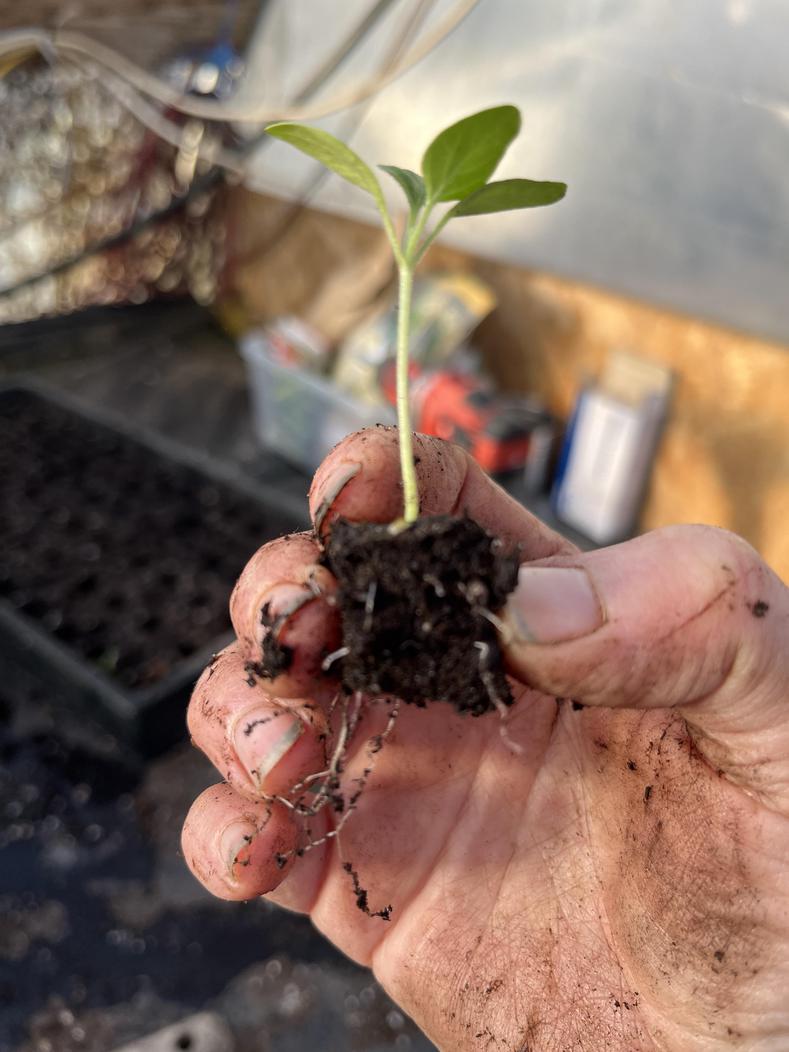
Week 6 Link to heading
Polytunnel cabbage, polytunnel kohlrabi (planting out: when temps are not expected to fall below -5 °C: 15 Feb - 1 March)
Week 7 Link to heading
Peppers (planting out: when temps are not expected to fall below 0 °C and soil is reliably warmer than 10 °C, 15 April)
Beetroot, chard (planting out: when soil is reliably warmer than 8 °C, 15 March - 1 April)
Chamomile, chervil, parsley (planting out: when temps are not expected to fall below -5 °C, 15 March)
Week 8 Link to heading
Cabbage, cauliflower, Brussels sprouts, broccoli, processing tomatoes (planting out: when temps are not expected to fall below 0 °C, 15 April)
Week 9 Link to heading
Sweet potato, turmeric, ginger (planting out: when soil is reliably warmer than 16 °C, 15 April - 15 May)
Weeks 10–11 Link to heading
Polytunnel cucumber (planting out: when temps are not expected to fall below 0 °C and soil is reliably warmer than 10 °C, 1 April)
Week 12 (after 15 March) Link to heading
Basil, beans, maize, thyme, dill, oregano, marjoram, courgette, cucumber, fennel, melon, watermelon, winter squash (planting out: when temps are not expected to fall below 0 °C and soil is reliably warmer than 10 °C, 15 April – 1 May)
These dates are based on the fact that in our plot, the last frost usually comes around 7 April — which, to my great frustration, reliably takes the apricot blossoms with it. Before that, it’s pointless to plant out heat-loving crops: even if they don’t freeze, they won’t really grow in soil that is too cool for their comfort.
Plant start in the soil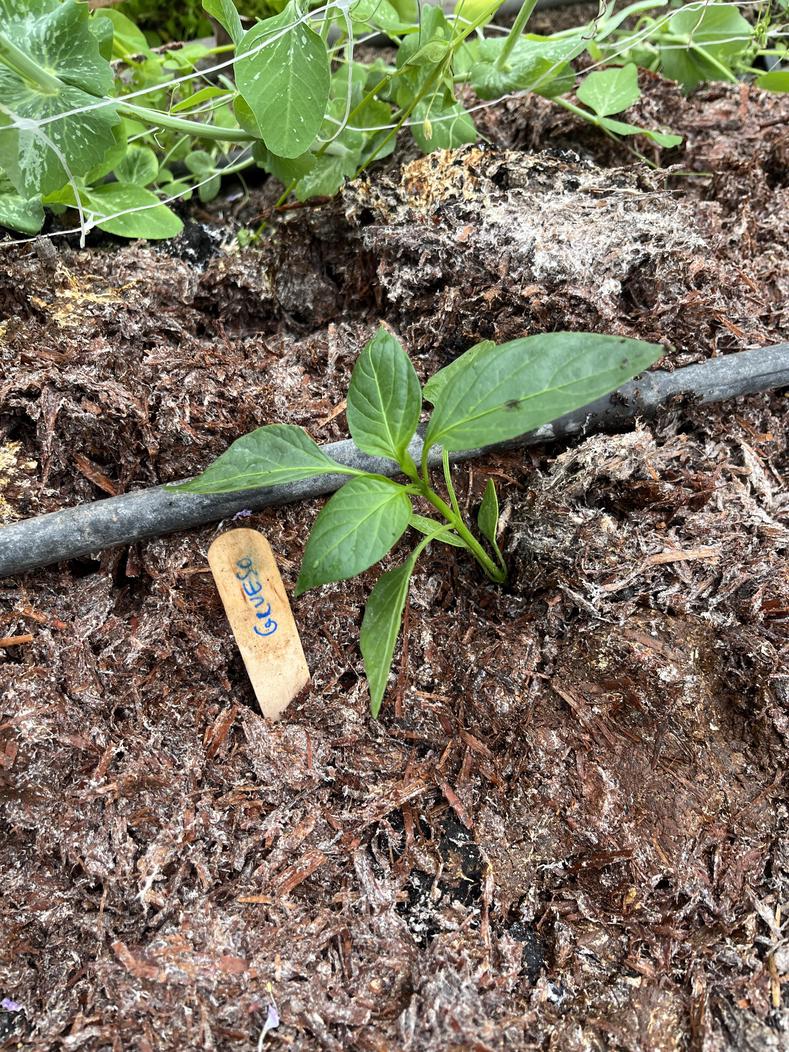
It usually takes a few weeks for the soil to warm up from then to the point where it gets hot enough for the cucurbits (cucumbers, courgettes) and then a few weeks more for the tropical plants (watermelon, sweet potatoes).
My unheated 36 m² polytunnel gives roughly a two-week head start compared to open ground, and with an extra layer of fleece, maybe even three. If, for example, summer only really starts after 15 May where you live, then everything should logically be shifted about a month later than my above schedule.
There’s no need to rush — and no benefit in delaying either. Overgrown seedlings establish worse in the soil than those planted just as their roots reach the edge of the soil block. The same applies to plants set out too early: they’re clearly more prone to disease and produce poorer yields. Their later-planted siblings are far more adaptable.
At some point you realise you’re just rediscovering the same old truths over and over again: in a garden: everything in its own time.
How does the Cornucopia GrowMachine help with this? Link to heading
The hardest part of planting out is not picking a date, but judging when conditions are actually right. The most reliable signal is soil temperature. Soil warms up slowly, and if it is warm enough, roots can start growing even if the air is still unpredictable. Air temperature still matters — a sudden cold spell can damage the leaves of heat-loving plants like tomatoes — so short-term forecasts also need to be part of the decision. What really complicates things is that conditions are rarely uniform. A bed shaded by a house can behave very differently from one in full sun, even within the same garden. Measuring temperature where your plant starts will actually grow, and combining that with weather patterns, gives a much clearer picture than calendar dates alone. Not to mention the fact that our grandparents agricultural wisdom no longer applies to our changing climate.
This is where the Cornucopia GrowMachine becomes useful. Instead of guessing or relying on averages, it lets me see when a specific bed has reached planting-ready conditions, and whether those conditions are likely to hold. Even if a cold spell slows things down above ground, warm soil means plants can recover and continue once the weather settles. That makes planting decisions calmer, more precise, and far better adapted to the small uncertainties that come with gardening in a changing climate.
| Crop | Min. soil temp | Notes |
|---|---|---|
| Spinach | 4–5 °C | Germinates cold; bolts if heat comes fast |
| Peas | 5 °C | Cold soil ok, but waterlogging kills |
| Onion (sets/seedlings) | 5 °C | Seedlings preferred for uniformity |
| Lettuce | 5–6 °C | Cold ok, growth slow |
| Beetroot | 7–8 °C | Cold ok, but slow |
| Cabbage | 7 °C | Transplants tolerate cold well |
| Broccoli | 7–8 °C | Roots stall in colder soil |
| Kale | 7 °C | Very forgiving |
| Potato | 8–10 °C | Cold soil risks rot |
| Fava/broad bean | 8–9 °C | Cold hardy but hates wet |
| Swiss chard | 10 °C | Slower below 12 |
| Parsley | 10 °C | Very slow germination |
| Celery/celeriac | 12 °C | Tolerates cool air but not cold roots |
| Bush/pole beans | 12–14 °C | Below 12 = rot |
| Sweet corn | 14 °C | Cold soil = poor stands |
| Courgette/zucchini | 14 °C | Cold shock sets plants back |
| Cucumbers | 15–16 °C | Below this = stunting |
| Tomato | 16-18 °C | Cold soil = root stagnation |
| Peppers | 16–18 °C | Very sensitive to cold roots |
| Aubergine | 18 °C | Below this = long-term setback |
| Melons | 18 °C | Cold soil ruins early vigor |
| Watermelons | 18 °C | Geotextiles to warm soil help |
| Sweet potatoes | 20 °C | Even brief <15 °C can cause yield loss |